
Jury finds Duane Davis guilty in murder of Tupac Shakur
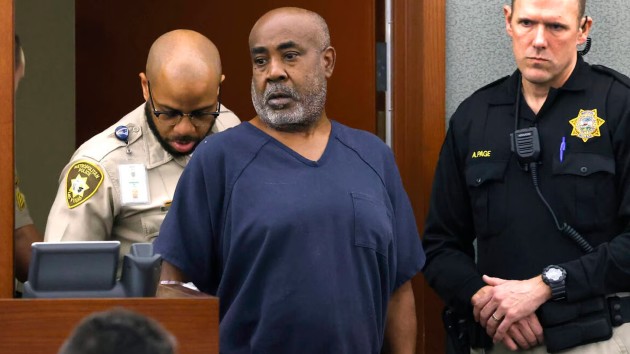
The jury has found Duane "Keffe D" Davis guilty in the murder of Tupac Shakur, 30 years after the rapper was killed in a drive-by shooting in Las Vegas.
Jurors deliberated for less than three hours before finding him guilty of murder with the use of a deadly weapon with the intent to promote, further or assist a criminal gang. The 63-year-old faces a possible maximum sentence of life in prison.
Davis stood with his lawyer as the verdict was read, then sat with his hands clasped on the table.
Clark County District Court Judge Carli Kierny has set Davis' sentencing for Oct. 13
Prosecutors say Davis did not fire the gun that killed Shakur in a drive-by shooting near the Las Vegas Strip on Sept. 7, 1996 -- they allege that was the work of either Orlando "Baby Lane" Anderson, Davis' nephew, or another man in the backseat of the car.
Police and prosecutors have accused Davis, an admitted longtime leader of a Los Angeles street gang, of being the "shot caller" and handing the gunman the murder weapon.
The jurors retired Monday after a marathon day of closing arguments that broke only briefly for a bathroom break and to get Davis a cough lozenge from Judge Kierny's personal stash.
Even without Davis' numerous confessions to his role in the killing of Tupac Shakur, the case is "drenched with circumstantial evidence" and corroborating witnesses, prosecutor Binu Palal told the jury during his closing argument Monday.
That -- taken together with Davis' incriminating and consistent accounts to police, to the media, and on the pages of his self-published memoir -- overwhelmingly show his guilt, Palal argued.
"For nearly 18 years, Duane Davis has told the police, television, books, YouTube interviewers -- anybody that will listen, he has told -- he is responsible for the murder of Tupac Shakur," Palal said. "Tell him you hear him -- find him guilty."
Meanwhile, defense attorney Michael Sanft said that three decades after the drive-by shooting, all prosecutors really have is Davis' alleged confessions -- which aren't worth the paper they're written on.
"We have to ask ourselves the question really at this particular point: Why are we here 30 years later if Duane Davis had actually confessed -- truly confessed?" Sanft said.
Sanft repeatedly emphasized what he said was a lack of real evidence supporting his client's incriminating claims while urging jurors to find Davis not guilty, saying it's the "only verdict that makes sense in this case."
Copyright © 2026, ABC Audio. All rights reserved.



Catch local and national news 24/7 from Fox News and NH1