
As Iran war escalates, children may face physical, mental health impacts
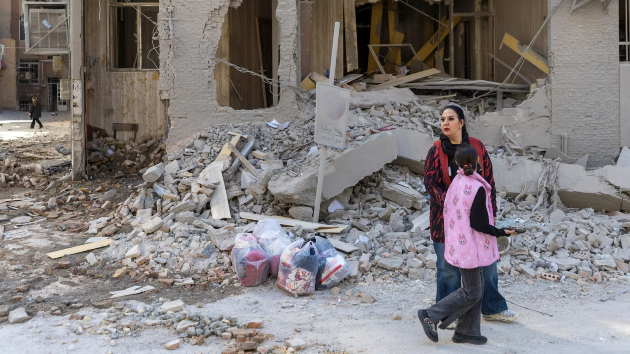
(NEW YORK) -- As the U.S.-Israeli military escalation with Iran continues, children may be experiencing devastating consequences of being caught in a conflict zone. Dozens of children and adolescents have been killed, many of whom were attending school at the time, according to the Iranian education ministry.
Doctors and humanitarian aid workers told ABC News that millions of children in the region are at risk of physical and mental health repercussions.
They add that it's important children have as much structure as possible to keep a sense of stability in their lives.
“Every war is a war on children,” Ahmad Alhendawi, regional director for the Middle East, North Africa and Eastern Europe at Save the Children, told ABC News. “They are not the reason why the war started, but they are the ones who pay the highest prices. Their childhood simply gets disrupted.”
Mental health effects
Dr. Zaher Sahloul, president and co-founder of the humanitarian organization MedGlobal, told ABC News that the mental and emotional toll on children in conflict zones is a “huge problem.”
“Children are some of the most vulnerable sectors of the community because they need to feel that they are supported, they need it to feel that there is safety and shelter and supporting communities and they need normalcy,” he said.
Sahloul said that when children are caught in conflict zones, a sense of stability and routine is essential.
This includes going to school consistently, having playgrounds available so they can play, regular family meals and a place to sleep at night.
When any of these are disrupted, it can affect children’s mental health, causing anxiety, hyperactivity, withdrawal or feelings of sadness, according to Sahloul.
He added, “The trauma that [children] incur from violence and from what they see on TV, and of course the direct witnessing of bombs and missiles and its impact on their communities and neighbors and families, all of this will cause a lot of mental health trauma that manifests itself based on the age of the child.”
Studies of past conflicts have shown the effects of living in war-torn areas.
At least 10% of those who experience traumatic events in armed conflict will have serious mental health problems and another 10% "will develop behavior that will hinder their ability to function effectively," according to the World Health Organization in a review of research findings.
Mental health impacts can be exacerbated when locales that are supposed to be safe spaces come under attack, Sahloul said.
Over the weekend, Shajare Tayyiba Elementary School, an all-girls elementary school in Minab located in southern Iran was hit by airstrikes, according to Iranian officials.
Iran has blamed the U.S. and Israel for the strike on the school, but Israel Defense Forces (IDF) have denied any connection. Top U.S. officials, including Secretary of State Marco Rubio, have insisted the U.S. does not target civilian infrastructure.
“That adds, of course, to the trauma,” Sahloul said. “These are areas that should be considered safe and when people die in school or in a hospital or in the market, I think that adds to the trauma.”
Physical effects on children
There are physical risks for children that come with living in conflict zones, such as breathing in smoke and ash from fires and blasts that can affect the nose and lungs.
Children may also be seriously injured during air strikes, resulting in disability such as the loss of limb, sight or cognitive capacity.
“The physical impact on children is much more significant because there are fears for their development,” Alhendawi said.
Sahloul added that because children’s bodies are often smaller, shorter and thinner than those of adults, they are more likely to be hurt by projectiles such as bullets or shrapnel.
In children, severe bleeding can lead to shock, he said. Children are also more prone to amputation because of the smaller size of their limbs and they’re more prone to burns because their skin is thinner than adults’ skin.
Sahloul said that mental health trauma in children can have effects on their physical health. Research has shown a significant association between physical health problems and clinical mental health symptoms.
“So [mental health symptoms] can lead to depressed immunity to fight infection,” he said. “It can lead to malnutrition. It can lead to stunted growth.”
Health experts noted adults may also experience similar physical and mental health effects in conflict zones and may benefit from similar interventions.
How to help
Experts told ABC News it's important to make sure that children are provided structure as much as possible while living in war zones to help with their development and well-being. Additionally, when possible, they said it important to create child-friendly spaces that allow children to learn, play and receive psychosocial support.
Alhendawi said Save the Children is not currently operating in Iran but is stationed in nine surrounding countries and is prepared to provide full shelter and basic services for a population that may be displaced.
Copyright © 2026, ABC Audio. All rights reserved.




Catch local and national news 24/7 from Fox News and NH1