
‘We won’t be erased’: Academics defend Black studies amid program cuts
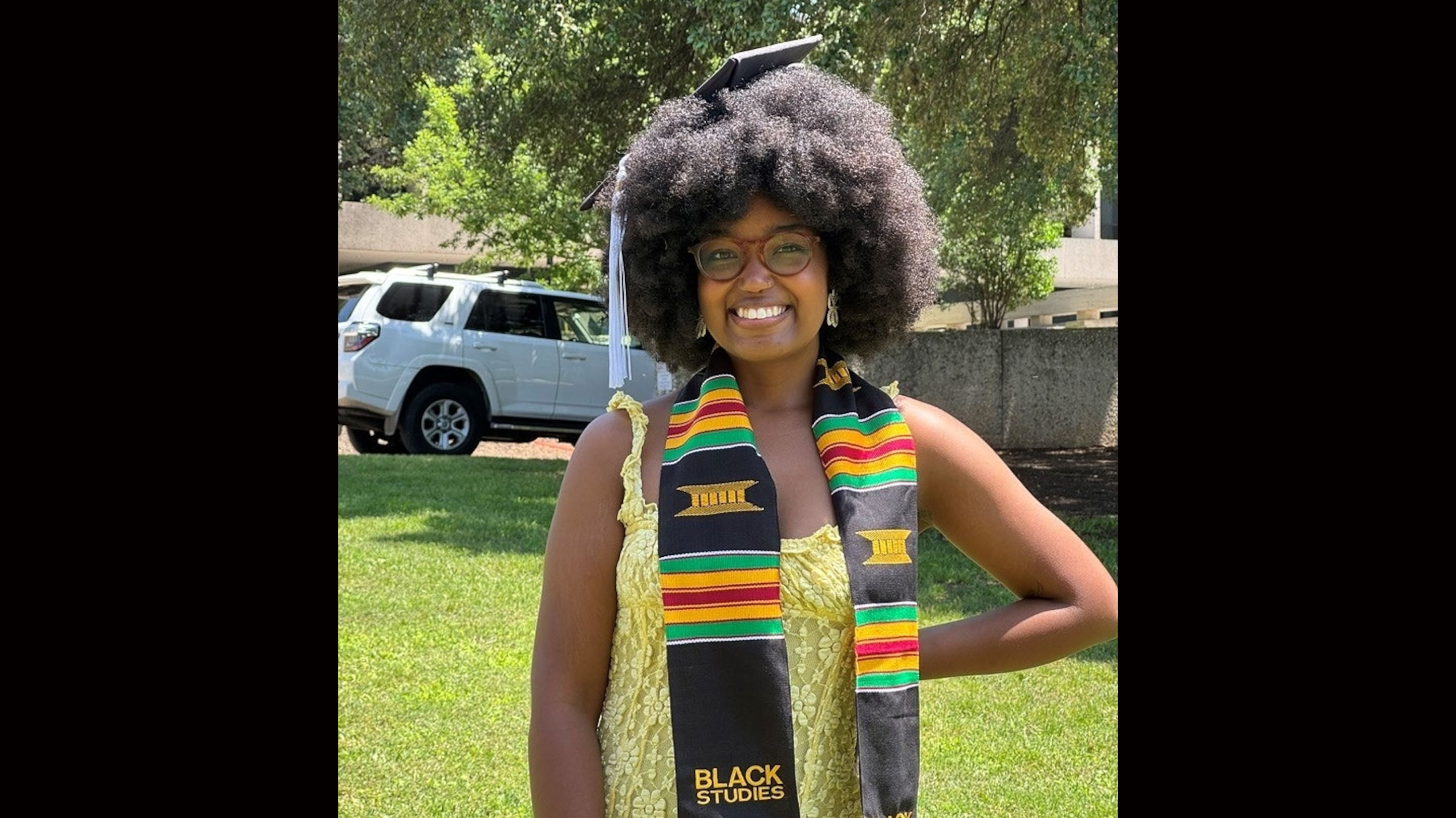
(NEW YORK) -- At a time when Diversity, Equity and Inclusion (DEI) efforts face local and federal backlash, some academics say that Black studies programs -- several of which have been scaled back at colleges and universities across the nation -- are more crucial than ever.
"The Trump administration has made clear to colleges and universities that they don't want them doing anything that is race conscious. So, institutions are very cowardly defunding and eliminating these academic programs and departments that have enriched the campus for decades," Dr. Shaun Harper, a professor at University of Southern California that specializes in racial equity, told ABC News.
According to Harper, President Donald Trump's executive order in January 2025 targeting DEI initiatives in the private sector has fueled nationwide anti-DEI sentiment.
The executive order instructed the Departments of Justice and Education to investigate DEI programs at institutions of higher education.
Trump's order doesn't explicitly mention Black studies programs at colleges and universities, but it criticizes institutions of higher education that use "dangerous, demeaning, and immoral race- and sex-based preferences."
Following his order, the Department of Education sent a letter to colleges and universities, notifying them that they will investigate and sever federal funding if they maintain DEI programs that the administration considers illegal.
"Many institutions haphazardly scrubbed their websites of everything related to race," Harper said.
The politicization of DEI at the federal level has created a "trickle-down effect" at institutions where Black history and experiences have been undervalued, according to Harper.
'We're not going anywhere. We won't be erased'
The University of Texas at Austin is one of the institutions that has consolidated their department this year.
Dr. Danielle Clealand, an associate professor at UT Austin that researches Black politics, told ABC News that there was "shock" among faculty and students when they were notified about the consolidation.
"We were the largest Black Studies department in the nation, so it was devastating," she said.
"It hurts really bad. I really don't like that I don't have a department anymore," Aidan Keys, a fourth-year Ph.D. student in African and African Diaspora Studies at UT Austin, told ABC News.
In a letter to the campus community obtained by ABC News, UT Austin President Jim Davis announced that the Department of African and African Diaspora Studies would merge into the Department of Social and Cultural Analysis.
Other departments, such as Mexican American & Latina/o Studies and Women's, Gender, and Sexuality Studies, were also brought under the single academic unit.
The university said it examined several factors to determine which programs should be merged like their size, student-to-faculty ratio and resource allocation.
"The University of Texas at Austin is committed to providing all of our students access to a world-class education," Davis stated. "How we choose to organize ourselves and allocate the resources we steward impacts this important commitment."
The announcement came after Texas Gov. Greg Abbott's 2023 passage of SB 17, banning public colleges and universities from having DEI offices and offering training or hiring policies based on race, gender and sexual orientation.
A UT Austin spokesperson told ABC News that the bill didn't apply to their curricula changes.
But Keys said that the university's decision to merge Black Studies is still politically motivated.
"I think that the [Abbott] administration is trying their hardest to silence us and erase more leftist ideas from the campus," she said.
According to Harper -- the University of Southern California professor -- recent cuts to Black studies programs appear to be more prevalent in institutions located in the U.S. Midwest and the South, based on his analysis.
"With the exception of historically Black colleges and universities, and perhaps a handful of other higher education institutions across the country, most predominantly white institutions have chronically failed to demonstrate their care for Black people," he said.
While students at UT Austin can still major in Black studies, Indiana University Bloomington no longer offers a degree in African American and African Diaspora Studies (AAADS).
Instead, undergraduate and graduate students earn a degree in Interdisciplinary Studies with a subfield in AAADS.
"We are totally against it," Professor Jakobi Williams, the chair of the AAADS department, told ABC News regarding the policy, adding that the department is advocating to reverse the degree title change.
"We're not going anywhere. We won't be erased," he added.
The university's decision to discontinue the AAADS major followed an Indiana state budget mandate -- introduced by the Republican majority -- requiring public institutions to graduate 15 students in a bachelor's degree program, seven students in a master's program and three students in a doctorate program over a three-year period to retain the degree.
Indiana University didn’t respond to ABC News’ request for comment on criticisms regarding the degree title change.
Williams explained that the AAADS department graduates about seven to 10 students annually across all degree programs.
'What we do is so important'
Proponents of Black studies argue that the discipline is valuable because it encourages students to develop cultural knowledge.
"The nature of our discipline is to speak truth to power and train students and the public at large regarding issues like discrimination and socio-economic relations, especially in the larger African diaspora," Williams said.
"Black Studies is experiencing a moment where we have to remind students why what we do is so important, not only to their academic experience but also to their training as citizens of this country," Cleadland, the associate professor at UT Austin, explained.
Harper, the USC professor, said that reductions to these programs can produce significant consequences, especially for non-Black racial groups.
"If we have millions of college-educated white Americans who go into the world not knowing anything about any other population besides white people, they are going to make lots of costly, very embarrassing mistakes," he said.
Harper also argued that Black studies and other disciplines have been challenged before, yet prevailed.
"Black Studies, Ethnic Studies, and Women's Studies are incredibly resilient fields that have encountered politicized resistance," he said. "We have seen and lived through this particular moment before, and those very important academic fields and disciplines survived."
ABC News' Deena Zaru contributed to this report.
Copyright © 2026, ABC Audio. All rights reserved.



Catch local and national news 24/7 from Fox News and NH1